puzzles

úterý 17. května 2011

Fruit salad mady by romanian students
Fruits Salad
Although it is not a 100% traditional food it is one of the children’s favorite so we couldn’t help but make it.
čtvrtek 7. dubna 2011


středa 6. dubna 2011
The sixth puzzles
Today we recieved next puzzles from Poland. We think we can create almost the whole region.


pondělí 4. dubna 2011
The Junii Feast
What is it?
A yearly festival called “Junii” (translated it would be “The Feast of the Young”
When?
On the first week after Easter, when it is the time to celebrate the new year of the Dacians, the ancestors of the Romanians. It is also the celebration of spring, the renewing of nature and the beginning of life.
The oldest document recorded in which this procession is mentioned in 26th March 1728, but it is assumed that the celebration already existed in antiquity.
How?
Seven groups of men from Schei will ride from the mountains and travel around Brasov. There are 7 groups due to the religious belief that God made the world in 7 days. They will be carrying with them mace like batons, which are scepters and flags, along with each group having their special and unique costumes.
http://www.youtube.com/watch?v=xJIn36TnzYE
Each group comes also from a different quarter in the Schei neighbourhood. The costumes of each differ through colour and badges.
The uniqueness of the event: the traditional costumes that they wear, some made around 1730’s. The basic outfit consists of a special pair of trousers, boots, a long white linen shirt with the sleeves garnished with national motifs and a hat. The horses are also traditionally decorated.
Symbols:
The Romanian flag also plays an important part in this occasion.
Traditional songs are sung and dances danced.
Young men are then placed, one by one, in the middle of the dancers and throw the scepter highest in the air, while some pass some tests of maturity and bravery. Whoever throws the scepter highest in the air wins the competition.
http://www.youtube.com/watch?v=Mv6H6tDB2zk
After the ritual ends, if the weather is good, The Junii and their families will have a barbecue with traditional music and the Romanian hamburger called “mic”.
A yearly festival called “Junii” (translated it would be “The Feast of the Young”
When?
On the first week after Easter, when it is the time to celebrate the new year of the Dacians, the ancestors of the Romanians. It is also the celebration of spring, the renewing of nature and the beginning of life.
The oldest document recorded in which this procession is mentioned in 26th March 1728, but it is assumed that the celebration already existed in antiquity.
How?
Seven groups of men from Schei will ride from the mountains and travel around Brasov. There are 7 groups due to the religious belief that God made the world in 7 days. They will be carrying with them mace like batons, which are scepters and flags, along with each group having their special and unique costumes.
http://www.youtube.com/watch?v=xJIn36TnzYE
Each group comes also from a different quarter in the Schei neighbourhood. The costumes of each differ through colour and badges.
The uniqueness of the event: the traditional costumes that they wear, some made around 1730’s. The basic outfit consists of a special pair of trousers, boots, a long white linen shirt with the sleeves garnished with national motifs and a hat. The horses are also traditionally decorated.
Symbols:
The Romanian flag also plays an important part in this occasion.
Traditional songs are sung and dances danced.
Young men are then placed, one by one, in the middle of the dancers and throw the scepter highest in the air, while some pass some tests of maturity and bravery. Whoever throws the scepter highest in the air wins the competition.
http://www.youtube.com/watch?v=Mv6H6tDB2zk
After the ritual ends, if the weather is good, The Junii and their families will have a barbecue with traditional music and the Romanian hamburger called “mic”.
pondělí 28. března 2011
London Bridge is falling down
LONDON TRADITIONAL SONG:
'LONDON BRIDGE IS FALLING DOWN'

London Bridge Is Falling Down From Wikipedia, the free encyclopedia
Traditional Published c. 1744 Form: Nursery rhyme "London Bridge Is Falling Down" is a well-known traditional nursery rhyme and singing game, which is found in different versions all over the world. It has a Roud Folk Song Index number of 502.
Lyrics
There is considerable variation in the lyrics of the rhyme. The most frequently used first verse is:
London Bridge is falling down,Falling down,
falling down.London Bridge is falling down,
My fair lady. Build it up with iron bars,Iron bars, iron bars,
Build it up with iron bars,
My fair lady. Iron bars will bend and break,Bend and break,
bend and break,Iron bars will bend and break,
My fair lady. Build it up with gold and silver,Gold and silver,
gold and silver,Build it up with gold and silver,
My fair lady.
'LONDON BRIDGE IS FALLING DOWN'

London Bridge Is Falling Down From Wikipedia, the free encyclopedia
Traditional Published c. 1744 Form: Nursery rhyme "London Bridge Is Falling Down" is a well-known traditional nursery rhyme and singing game, which is found in different versions all over the world. It has a Roud Folk Song Index number of 502.
Lyrics
There is considerable variation in the lyrics of the rhyme. The most frequently used first verse is:
London Bridge is falling down,Falling down,
falling down.London Bridge is falling down,
My fair lady. Build it up with iron bars,Iron bars, iron bars,
Build it up with iron bars,
My fair lady. Iron bars will bend and break,Bend and break,
bend and break,Iron bars will bend and break,
My fair lady. Build it up with gold and silver,Gold and silver,
gold and silver,Build it up with gold and silver,
My fair lady.
London Tradicional Costume

Pearly Kings and Queens From Wikipedia, the free encyclopedia:
Pearly Kings and Queens, known as pearlies, are an organised charitable tradition of working class culture in London, England. The practice of wearing clothes decorated with pearl buttons originated in the 19th century.It is first associated with Henry Croft, an orphan street sweeper who collected money for charity. At the time, "Costermongers" (London Street traders) were in the habit of wearing pearl buttons along the seams of their trousers. Croft adapted this to create the 'pearly suit' to draw attention to himself and aid his fund-raising activities.In 1911 an organised pearly society was formed in Finchley, north London. Croft died in January 1930 and his funeral was attended by 400 followers from all over London, receiving national media coverage. In 1934 a memorial was unveiled to him in St Pancras Cemetery and at a speech to mark the occasion he was said to have raised £5,000 for those suffering in London's hospitals. The statue was later moved to the crypt of St Martin-in-the-Fields, Westminster. The inscription reads: "In memory of Henry Croft who died January 1st 1930 aged 68 years. The original Pearly King"
The pearly organisation is now known as the Original London Pearly Kings and Queens Association. Following disagreements, a rival London Pearly Kings and Queens Society has also been set up and another called the Pearly Guild. Each group is associated with a church in central London and works to raise money for London-based charities.


pátek 25. března 2011


LONDON LOCAL SONG

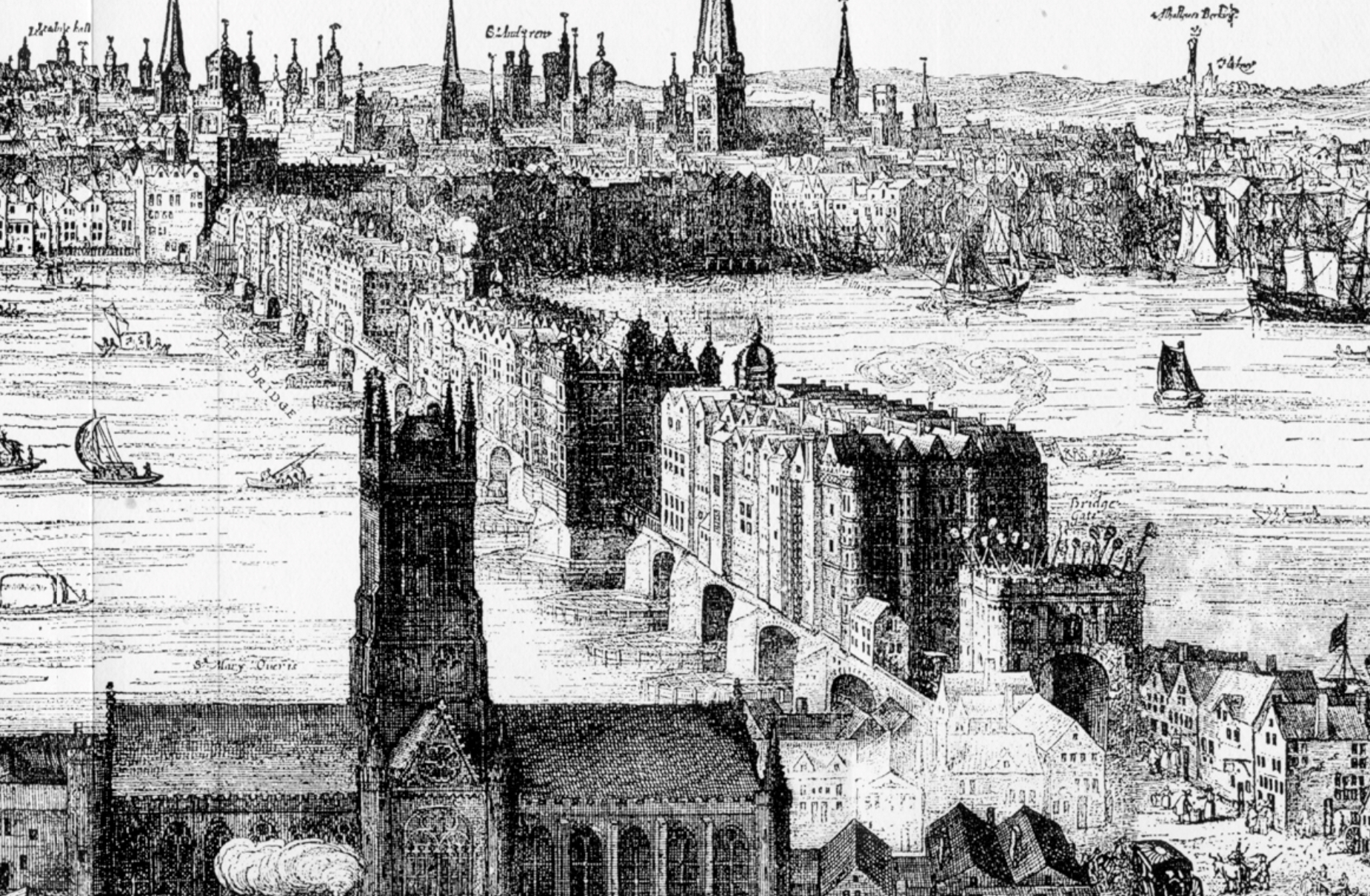
London Bridge Is Falling Down
From Wikipedia, the free encyclopedia
From Wikipedia, the free encyclopedia
Traditional
Published c. 1744
Form: Nursery rhyme
"London Bridge Is Falling Down" is a well-known traditional nursery rhyme and singing game, which is found in different versions all over the world. It has a Roud Folk Song Index number of 502.
Published c. 1744
Form: Nursery rhyme
"London Bridge Is Falling Down" is a well-known traditional nursery rhyme and singing game, which is found in different versions all over the world. It has a Roud Folk Song Index number of 502.
Lyrics
There is considerable variation in the lyrics of the rhyme. The most frequently used first verse is:
London Bridge is falling down,Falling down,
falling down.London Bridge is falling down,
My fair lady.
Build it up with iron bars,Iron bars, iron bars,
Build it up with iron bars,Iron bars, iron bars,
Build it up with iron bars,
My fair lady.
Iron bars will bend and break,Bend and break,
Iron bars will bend and break,Bend and break,
bend and break,Iron bars will bend and break,
My fair lady.
Build it up with gold and silver,Gold and silver,
Build it up with gold and silver,Gold and silver,
gold and silver,Build it up with gold and silver,
My fair lady.
Meaning and origin
Meaning and origin
The meaning of the rhyme is not certain. It may simply relate to the many difficulties experienced in bridging the River Thames but a number of alternative theories have been put forward.
Viking attack theory
One theory of origin is that the rhyme relates to supposed destruction of London Bridge by Olaf II of Norway in 1014 (or 1009).
Age and damage theory
According to Walt Disney's The Truth About Mother Goose (1957) the rhyme refers to the deterioration of the original London Bridge (built in 1176, which had been considered a wonder of the world) due to a combination of age and the Great Fire of London of 1666. This original bridge was finally ordered demolished on 4 July 1823, when Royal Assent is given for Act to Rebuild London Bridge.
"Fair lady" identity
Several attempts have been made to identify the 'fair lady', 'lady gay', or lady 'lee/lea' of the rhyme. They include:
Matilda of Scotland (c. 1080–1118) Henry I's consort, who between 1110 and 1118 was responsible for the building of the series of bridges that carried the London-Colchester road across the River Lea and its side streams between Bow and Stratford.
Eleanor of Provence (c. 1223–91), consort of Henry III who had custody of the bridge revenues from 1269 to about 1281.
A member of the Leigh family of Stoneleigh Park, Warwickshire, who have a family tradition that a human sacrifice lies under the building.
čtvrtek 24. března 2011
LONDON TRADITIONAL COSTUME: THE PEARLY QUEENS AND KINGS
Children in years 4, 5 and 6 have been designing some traditional clothes wore by the London Pearly Queens and Queens.

Pearly Kings and Queens
From Wikipedia, the free encyclopedia:
From Wikipedia, the free encyclopedia:
Pearly Kings and Queens, known as pearlies, are an organised charitable tradition of working class culture in London, England.
The practice of wearing clothes decorated with pearl buttons originated in the 19th century.It is first associated with Henry Croft, an orphan street sweeper who collected money for charity. At the time, "Costermongers" (London Street traders) were in the habit of wearing pearl buttons along the seams of their trousers. Croft adapted this to create the 'pearly suit' to draw attention to himself and aid his fund-raising activities.In 1911 an organised pearly society was formed in Finchley, north London.
Croft died in January 1930 and his funeral was attended by 400 followers from all over London, receiving national media coverage. In 1934 a memorial was unveiled to him in St Pancras Cemetery and at a speech to mark the occasion he was said to have raised £5,000 for those suffering in London's hospitals. The statue was later moved to the crypt of St Martin-in-the-Fields, Westminster. The inscription reads:
“In memory of Henry Croft who died January 1st 1930 aged 68 years. The original Pearly King”
The pearly organisation is now known as the Original London Pearly Kings and Queens Association. Following disagreements, a rival London Pearly Kings and Queens Society has also been set up and another called the Pearly Guild. Each group is associated with a church in central London and works to raise money for London-based charities.


středa 23. března 2011

neděle 6. března 2011
sobota 5. března 2011
Most and the local costume
Dear friends,
we tried to find any local costume, but unsuccessfully. We found the COAL- MINER only.
We live in a region where coal - mining is historically tied with the living.
At the beginning of the 19 th century the mining started and lasting till now. Bye for now Czech team


we tried to find any local costume, but unsuccessfully. We found the COAL- MINER only.
We live in a region where coal - mining is historically tied with the living.
At the beginning of the 19 th century the mining started and lasting till now. Bye for now Czech team

čtvrtek 24. února 2011
2. topic - OUR SCHOOL - VIDEO ( czech )
What do you know about Czech school system? We will try to show you how our school look like! Watch our video and enjoy it!
středa 23. února 2011
Czech puzzle board
We started collecting all puzzles and creating our puzzle board. Look at the photo!!


Tradicional local costume from Poland
To jest FOLKOWY strój ślaski w naszym regionie .
THIS IS THE FOLK, SILESIAN OUTFIT IN OUR REGION .

Romanian tradicional song - Brasov
Yupiiiiii! Our song is here! We put on our tradicional costumes! We had a great time while recording the song! Enjoy it and let us know if you like it :-) .

pondělí 14. února 2011
Czech puzzle board
Dear friends,
there is our puzzle board that we are creating from your puzzles.
We will add a new photo with some new puzzles :-). Czech Team
there is our puzzle board that we are creating from your puzzles.
 |
| Zdroj 100OLYMP |
We will add a new photo with some new puzzles :-). Czech Team



pondělí 7. února 2011
Czech tradicional song - Prší, prší, jen se leje
Dear friends,
we finished that task where we had a lot of fun. We recorded czech song, wearing raining coats and umbrellas. We also drew some pictures showing the plot of the song.
We made a film from the pictures.
And here we are, singing the song :
we finished that task where we had a lot of fun. We recorded czech song, wearing raining coats and umbrellas. We also drew some pictures showing the plot of the song.
We made a film from the pictures.
And here we are, singing the song :
pondělí 31. ledna 2011
středa 26. ledna 2011
Video from Brasov
Finally we have managed to finish our video with the tour of Brasov. Altrough we are a little late I hope you will enjoy it ! Here you can find the fruit of our work:
Přihlásit se k odběru:
Příspěvky (Atom)